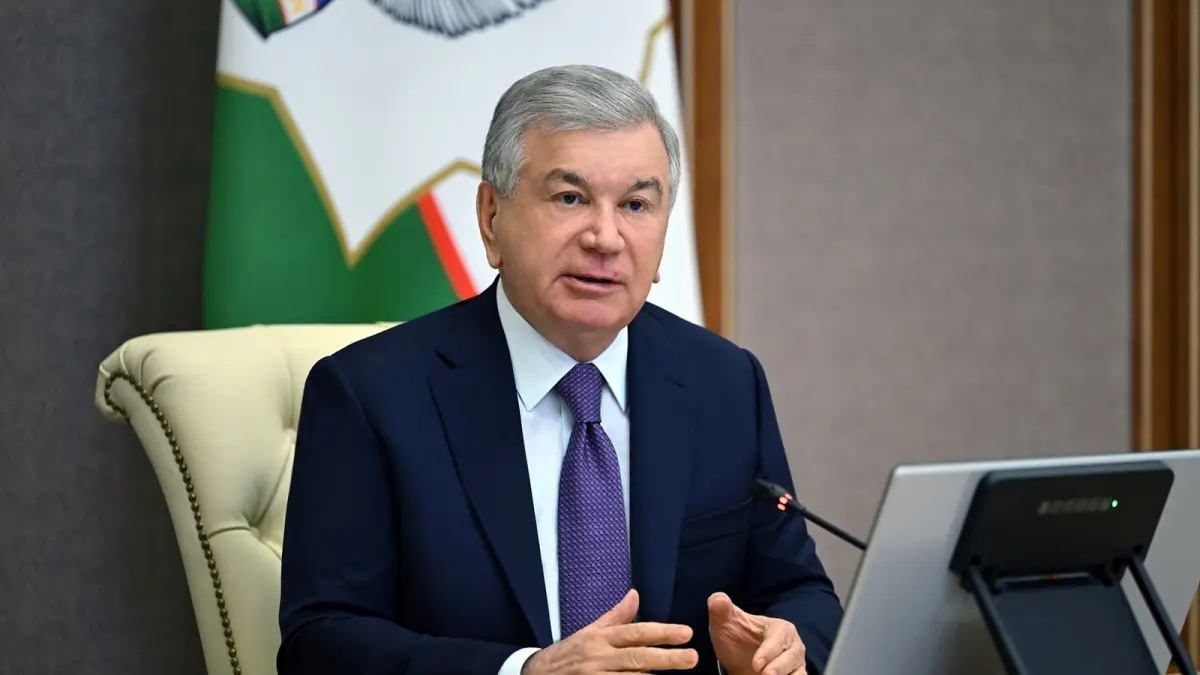
Tashkent, 26 November. President of Uzbekistan Shavkat Mirziyoyev on 25 November reviewed a presentation on a new stage of reforms to develop entrepreneurship and employment, his press service reported.
By 2030 the proposed measures are meant to raise the share of the middle class to 90% and the share of small and medium-sized businesses in employment to 80%.
The starting point was the result of previous years: since 2017, according to the press service, 11 million people have left poverty. The authorities now want to move from fighting poverty to stable high incomes and growth of the middle class.
The presentation also named weak spots. Micro, small and medium-sized businesses employ 75% of Uzbekistan’s workforce but produce only 55% of gross domestic product, which means productivity in the sector is low. Only 4% of micro-enterprises grow into larger businesses, almost four times below international levels. In high-income sectors such as information technology, logistics, finance and insurance, small businesses account for just 8%.
Entrepreneurs have been promised support at every stage, from starting a business to entering foreign markets. Officials were instructed to make wider use of loans, guarantees and sureties, leasing, factoring, venture financing and equity investment. The share of loans backed by guarantees and sureties in total lending to business is to rise from 1% to 12%, and the share of funds from international financial institutions and market borrowing from 17% to 35%.
The Central Bank of Uzbekistan put forward its own measures. They include new ways of assessing creditworthiness, secure data exchange between banks and fintech companies, and the ability to receive offers from several banks at once through a single application. Mechanisms for out-of-court settlement of financial disputes were also proposed.
Support is to be built vertically, from the national level down to the mahalla, the neighbourhood community through which part of Uzbekistan’s social programmes are delivered. Business incubators and project offices will appear in the regions, and one-stop support centres for small and medium-sized businesses in the districts. Assistants to khokims (district heads) will be assessed not by the number of businesses created but by whether they keep working, whether jobs are retained and whether turnover grows.
The regions are to carry out a thousand projects worth 81 trillion soums and create 320,000 jobs. Mirziyoyev instructed officials to refine the initiatives and clearly divide tasks among ministries.
What it means: Uzbekistan is acknowledging that its small business sector is numerous but small-scale and unproductive, and is changing how it supports it: less counting of new firms, more money through guarantees and the market. Specific documents and deadlines have not yet been adopted.
Who benefits: Uzbek entrepreneurs, who are promised access to guaranteed loans and a choice of banks. Banks and fintech companies, which will get to exchange data on borrowers.
Background: Uzbekistan is the most populous country in Central Asia and one of Kazakhstan’s main trading partners in the region. A khokim is the head of a regional, city or district administration.
We have also reported that the World Bank approved 800 million dollars for reforms in Uzbekistan.



