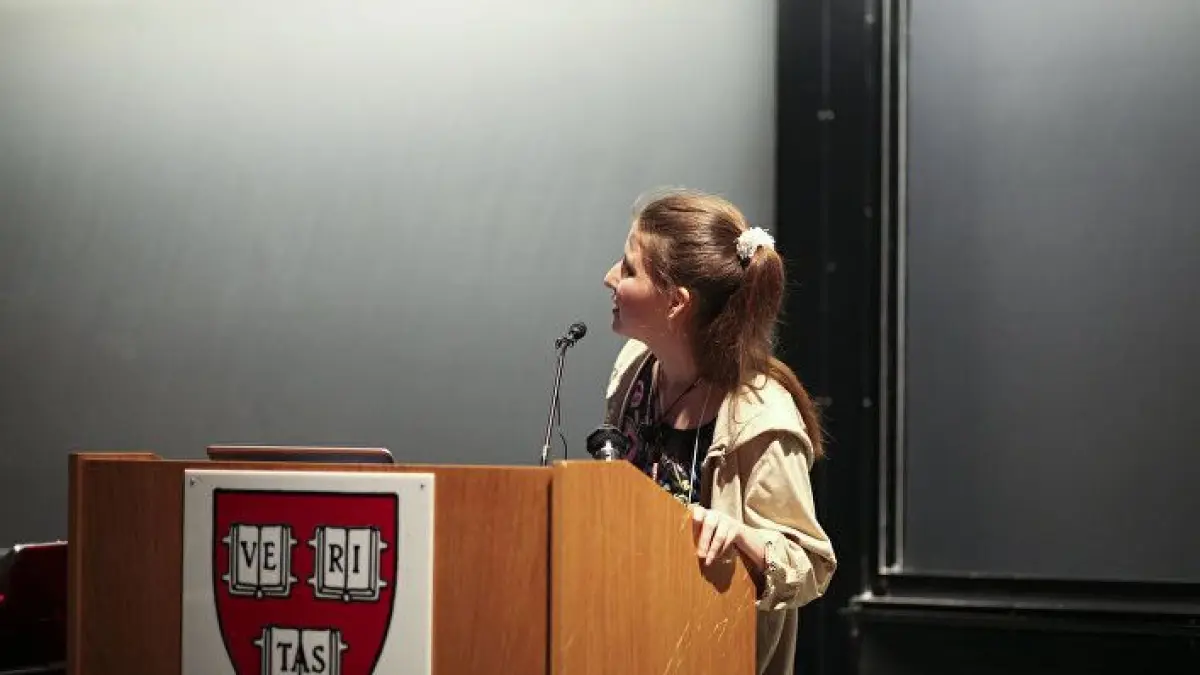
The intellectual property crime unit of the London police has called Kazakhstani Alexandra Elbakyan a cybercriminal. Her site Sci-Hub provides free access to tens of millions of scientific articles. According to the London police, they were obtained illegally through phishing attacks, VRK News reports.
Police appealed to students and universities and urged them not to use this site. It includes more than 80% of the world's published scientific papers. Sci-Hub was created to remove all obstacles in the way of science and allows people not to pay large fees to publishers such as Elsevier, Wiley and Springer.
As the British newspaper Independent writes, according to police Sci-Hub used phishing emails to deceive university staff and students and obtain their credentials. This information was then used to hack the university network and download research papers. At least 42 universities in Britain were attacked.
“Students should be aware that accessing such websites is illegal, since they host stolen intellectual property. Visitors to the site are very vulnerable to theft of their login details,” said Detective Kevin Ives.
According to him, students are studying at home and it is important that universities do not allow students to access stolen information.
External content: cdn.jwplayer.com
“It is very important that students and universities report cases of cybercrime so that we can build a clear picture of the latest threats and give the best advice on how not to fall victim to cybercriminals such as Sci Hub,” he said.
The police advise university IT departments to block Sci-Hub on their network and urge students to use separate passwords for their personal and university accounts.
Who Alexandra Elbakyan is
This internet pirate is hunted both by the US Department of Justice and by a crowd of angry publishers with great legal muscle. The VRK News agency has already written about her in its article headlined “Alexandra Elbakyan: Kazakhstan's Robin Hood backed by US scientists”. Meanwhile time passes, and in 2019 it was already reported that the US Department of Justice was investigating a case against Alexandra Elbakyan. She is suspected of working for the Main Directorate of the General Staff of the Russian Armed Forces (GRU). But is she really a Russian spy? Or is this simply slander against a person who is fighting for the freedom of research?
Comparatively recently, at the end of January 2021, the Swedish newspaper Dagens Nyheter spoke with the Western-disgraced Kazakhstani Alexandra Elbakyan. The newspaper writes that her place of residence is not known, and that she gives interviews only through an encrypted chat. To confirm that Alexandra Elbakyan was really at the other end of the chat, she sent a short video recording and, as agreed, left a message in one of the side menus of the Sci-Hub site.
“I prefer to lead a non-public life so as not to give publishers a chance to attack me. The place where I am now is in itself nothing unusual. I simply do not want to become a target of attacks,” writes Alexandra Elbakyan.
She does not keep track of all the publishers who have sued her or are trying to, but, besides Elsevier, names several other large companies, such as ACS and Springer Nature.
It recently became known that the US Department of Justice has begun an investigation into her possible links with Russian intelligence, but she fears no consequences despite this.
“It amuses me. But am I afraid?” she asks herself, and then writes something for a long time before answering. “Not yet. So far nothing significant has happened. Sci-Hub is a Russian-language project, and that seems suspicious to the USA. I am not surprised that they began an investigation on this matter; I have been expecting it for several years.”
Dagens Nyheter: Is there a link between Sci-Hub and the Russian state?
Alexandra Elbakyan: I am not aware of any direct links.
— What do you mean by that?
— One can always find indirect, abstract links between people, events and organisations. But we do not cooperate directly.
At the time of writing, the Sci-Hub library consisted of more than 79 million scientific texts. Each of these publications represents a potential copyright violation. Elbakyan knows this but believes that free access to research is much more important, since it helps science make new discoveries faster and stimulates progress.
“It is the same here as for everyone who works on something they consider important. You have to do something in your life, somehow change the world,” she says.
One of those who tried to stop her is Andrew Pitts, founder of the British organisation PSI, which has for many years been hunting Sci-Hub on behalf of publishers. He claims that Sci-Hub uses stolen account data of students and researchers to penetrate university computer systems. According to him, he has evidence that Sci-Hub obtains this information by deception, using so-called “phishing” aimed at university teachers and students.
Alexandra Elbakyan does not deny that Sci-Hub uses third-party accounts, but stresses that theft of data is never involved.
“Perhaps Sci-Hub does collect account information from various sources, but it does not itself engage in phishing or anything similar. Besides, account data is not a physical object that can be stolen. It may be known without being stolen like some kind of thing,” she explains, without going into detail, however, about how else this could happen.
Since the publishers have been unable to get at Sci-Hub with their lawsuits, they have turned their eyes to internet providers. For example, Sweden's patent court recently ruled that Bahnhof, Telia, Com Hem and many other providers must block their users' access to Sci-Hub in just the same way as was done earlier with the file-sharing site PirateBay.
However, Alexandra Elbakyan is not troubled by what is happening. Users can still reach the site if they temporarily change their IP address. And if access is cut off completely, all the materials have anyway already been uploaded to another similar service, from where they have been copied to many libraries.
“So even if Sci-Hub is closed, which I hope will never happen, the materials will remain freely available anyway,” says Alexandra Elbakyan.
Sci-Hub as science's free storehouse
Sci-Hub is a file-sharing site specialising in scientific texts. Including by hacking university information databases, Sci-Hub downloads scientific articles, papers and materials from all the resources to which university libraries subscribe. The texts are then posted in open access on the site.
Sci-Hub is a resource with a controversial reputation, since the copyright in these texts belongs to scientific publishers who make money from subscriptions. A New York court in 2017 found the site guilty of copyright infringement.
Sci-Hub is supported by voluntary bitcoin donations. To date the resource holds 79 million documents, which anyone can read free of charge.
It is worth noting that 31-year-old Alexandra Elbakyan was born in Kazakhstan. She has higher technical and linguistic education: she is a candidate of technical sciences in information technology and also a master of linguistics. She is the sole founder of Sci-Hub. The site itself appeared in 2011 and, by her account, she has kept it running ever since without anyone's help.


