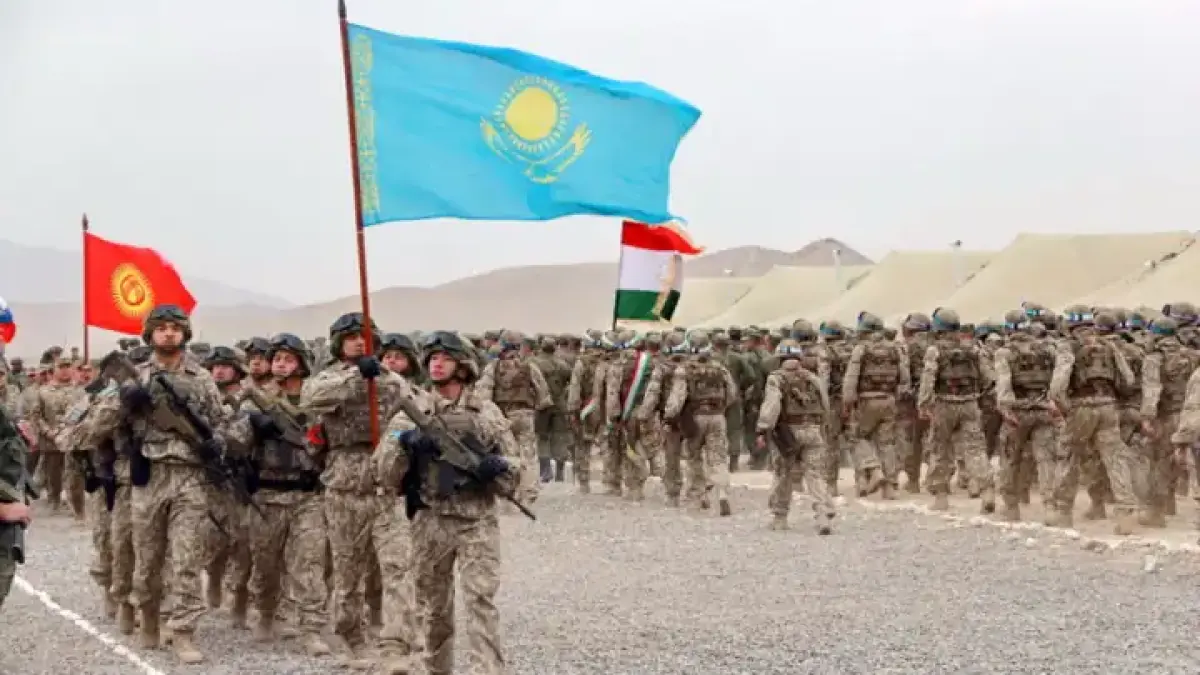
Well-known Kazakhstani political analyst Gaziz Abishev has spoken about when Kazakhstan will start defending Russia, VRKNews.kz reports.
The analyst noted that Kazakhstan is again being asked (after Kassym-Jomart Tokayev's direct answer yesterday to a direct question about recognising the “DNR and LNR republics”) from unauthorised levels at which strategic decisions are not made: “When will it finally begin to genuinely fulfil its allied obligations within the CSTO bloc?”
And here is how the analyst put it.
“Akorda and Kazakhstan's Foreign Ministry will not answer. But it is known when. If suddenly some Russophobic leader of a large or small power gets an itch to declare a special military operation on Russian territory. And Tomahawks flash in the sky over Murmansk, Tula, Samara, Novosibirsk, Krasnoyarsk, Khabarovsk. Enemy salvo systems clatter over peaceful cities. Hordes of tanks rush across Russian land. Russia's ruler declares martial law. And then there will not even be any need to observe formalities and turn to allies for help under the CSTO Charter — Kazakhstan will, without needless questions, rush to defend the sovereignty of the Russian state. An obvious threat to Russia will leave no one indifferent. And Astana will not care about the enemy side's assurances that it was forced to bomb Russia, that it was left no other way out, that all will end if Russian troops lay down their arms. Words are words, but it is our allied Russia that is being bombed, bringing grief to peaceful Russians. Russia came to help when a mess was brewing on Kazakhstan's territory — and Kazakhstan will no doubt offer a brotherly shoulder should the foe's foot step on Russian land (internationally recognised) with evil intentions...,” expert Abishev replied.
The gist of the answer seems more than clear.
President Kassym-Jomart Tokayev earlier, in an interview with journalist Andrei Kondrashov on the Rossiya 24 TV channel, responded to statements that Russia “saved” Kazakhstan during the January events.
“In Russia some people distort this whole situation, claiming that, they say, Russia ‘saved’ Kazakhstan and Kazakhstan must now forever ‘serve and bow down at the feet’ of Russia. I consider this reasoning completely unjustified and far from reality,” Kassym-Jomart Tokayev said in the interview on the Rossiya 24 TV channel.
The head of state then noted that from the very beginning it had been agreed that the contingent would not take part in the use of force.
“Indeed, not a single shot was fired by the CSTO limited contingent, and they were here for no more than 10 days,” the president of Kazakhstan noted.
Recall that the January events in Kazakhstan began with peaceful rallies, when residents of different cities of the country demanded a cut in the price of liquefied gas and then of food. Later, from 4–5 January, the unrest grew into pogroms in the south, east and west of the country, looting began, and militants attacked state institutions, pre-trial detention centres, police buildings and airports and seized weapons. Looting of shops and banks, shooting and loss of life became known in Almaty, Taldykorgan, Taraz, Kyzylorda, Shymkent, Ust-Kamenogorsk and Semey. A state of emergency was declared in Kazakhstan — first in some regions and then across the whole country. The internet was completely blocked. Only a few state-controlled state media remained accessible. Reports appeared of hundreds of people injured in the unrest.
President of Kazakhstan Kassym-Jomart Tokayev dismissed the government of Askar Mamin and headed the Security Council of Kazakhstan in place of Nursultan Nazarbayev. At the invitation of the country's president, CSTO troops arrived in Kazakhstan on 6 January on a “peacekeeping mission”. Society expressed displeasure at Tokayev's decision to bring in foreign troops, but this decision became a turning point at a time when the local army and special services had partly turned out to be disorganised. The CSTO forces were directed entirely at guarding the country's strategic facilities, which freed the resources of Kazakhstan's own special forces to counter the unrest. An anti-terrorist operation regime was declared and cleansing of cities of protesters began. And already on 7 January the Kazakhstani authorities reported the restoration of order in the country. But the unrest and cases of looting were stopped completely only closer to the middle of January.
As a result of these events Kazakhstan changed its prime minister, state secretary and the speaker of the lower house of parliament. Of the 16 ministers, half were replaced. Nazarbayev lost the post of leader of the ruling Nur Otan party (now Amanat). That post was taken by Tokayev (on 26 April he left the party, and the post of chairman was taken by the current Mazhilis speaker Yerlan Koshanov).


