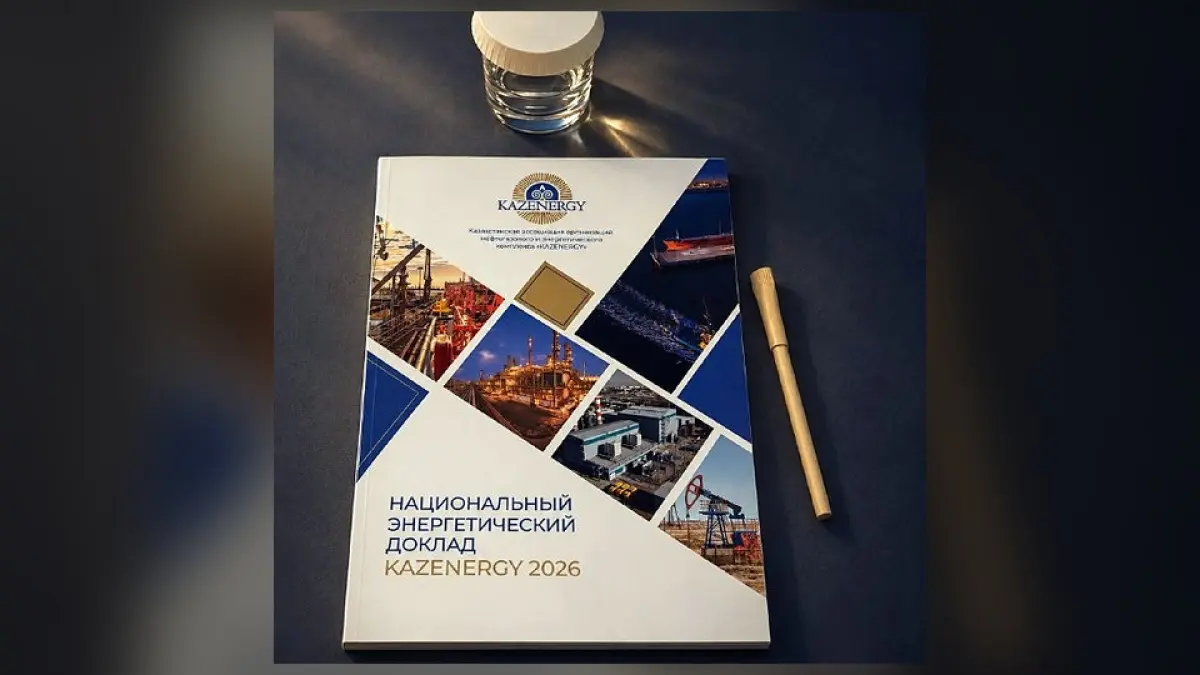
Astana, November 6. At the presentation of the KAZENERGY National Energy Report 2026, six issues troubling the sector were named, from depleting oil fields to the calculation of the capacity tariff, the KAZENERGY association said.
More than 120 representatives of government bodies and oil, gas and energy companies took part in the discussion, among them Deputy Energy Minister Kayirkhan Tutkyshbayev. The association gathered the results by topic.
Oil production: the resource base is depleting and investment appeal is falling. Oil products: the price gap with neighbouring countries creates conditions for grey exports; it was proposed to continue price liberalisation and raise the profitability of the domestic market. New refinery: the source of feedstock has not yet been determined, and buying oil from the three largest producers at the export price may affect the cost of oil products. Gas: growing domestic demand deepens the shortage of commercial gas, and selling gas to households below cost burdens producing companies and QazaqGaz, so pricing approaches need revision. Power industry: there is no method for calculating the capacity tariff, whose share in the final cost of electricity may rise to 45% within five years. Moreover, feasibility studies for expanding existing stations do not pass state expert review when a capacity tariff is obtained, and inflated demand forecasts may lead to underuse of new capacity and further growth in the cost of electricity. Capacity planning: it was proposed to review projects to build and expand stations that did not pass competitive selection.
Participants were asked to study the report again and send their comments to KAZENERGY; the association will work them through with the Government. The extension of the ban on exports of petrol, diesel and several oil products to May 22, 2027 became known the same day, Zakon.kz wrote.
What it means: The report gathers the sector’s problems into six knots, and almost all of them come down to price: cheap petrol and gas for the domestic market, the capacity tariff in the power industry and the export price of feedstock for the new refinery.
Who benefits: By KAZENERGY’s description, revisiting prices and the tariff approach benefits companies that lose on regulated prices, that is QazaqGaz and producing companies; for consumers it may turn into higher prices. The announcement contains no assessment of the consequences for consumers.
Background: KAZENERGY is the association of Kazakhstan’s oil, gas and energy organisations; the National Energy Report sums up the results and problems of the fuel and energy complex. A capacity tariff is the payment power stations receive for being ready to supply capacity, regardless of how much electricity they generated. Grey export is taking goods abroad in circumvention of the rules, for example petrol, which is cheaper in Kazakhstan than in neighbouring countries. Commercial gas is purified gas ready for sale to consumers.



