On Friday, November 6, three Kazakh documents said the same thing in different words: the country has the resource, but the domestic market lacks the finished product. The Supreme Audit Chamber wrote it about gas, the National Energy Report about electricity, and the energy minister’s order about petrol and diesel.
November 6
- 3.8 trillion cubic metres
gas reserves according to the Supreme Audit Chamber - 24.1 billion tenge
financial violations in the gas industry - 3.1 GW
power capacity shortfall in 2026 including reserve - 2.7 GW
forecast shortfall for 2032 - May 22, 2027
the date to which the ban on petrol and diesel exports is extended
Based on the materials of the review
- 3.8 trillion cubic metres
Gas in the ground and gas in the pipe
The Supreme Audit Chamber (SAC) put Kazakhstan’s gas reserves at 3.8 trillion cubic metres; in 2022–2025 the country produced 239.5 billion. But output of commercial gas, that is gas prepared to a standard and fit for sale, lags behind growth in domestic demand. The auditors named other bottlenecks: a large part of the gas transport infrastructure operates beyond its standard service life, the market depends on a narrow circle of subsoil users, and gas that does not meet standards wears out compressors faster and forces the national operator to give discounts on exports. Financial violations came to 24.1 billion tenge, of which 18.2 billion was inefficient planning and use of budget funds, and 59.4 million tenge was returned to the budget during the audit; we published the details the same day.
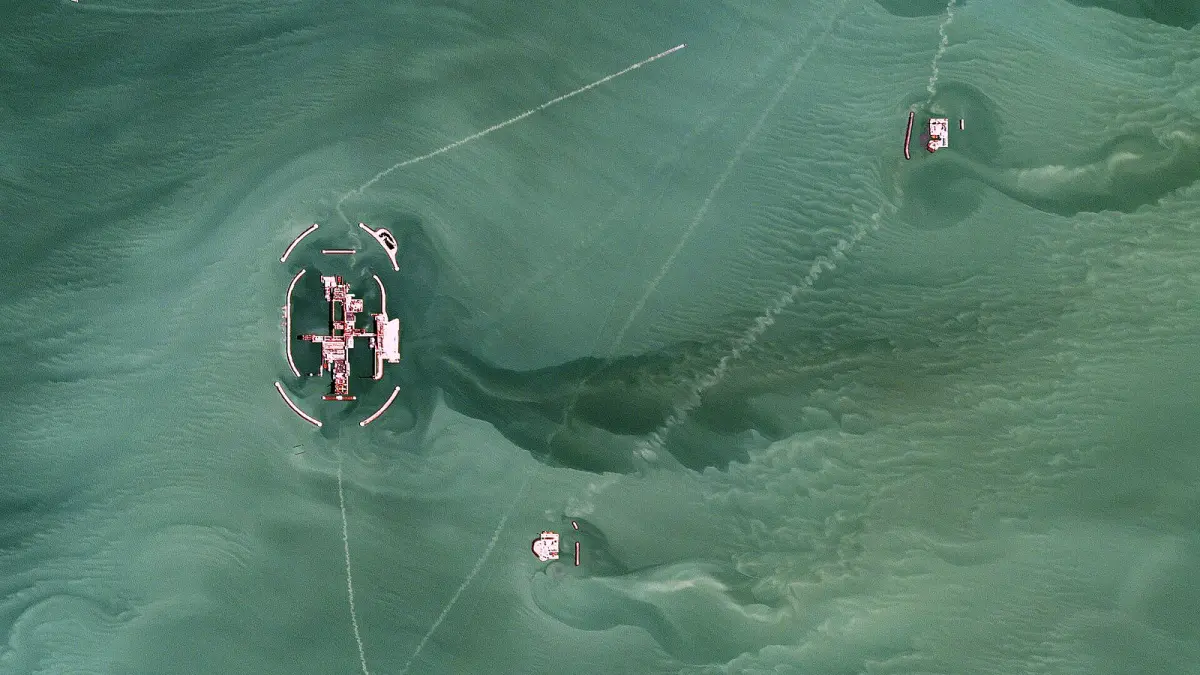
That day QazaqGaz Processing, a subsidiary of the national company QazaqGaz, signed a contract to build a gas processing plant at Kashagan with a capacity of 2.5 billion cubic metres of gas a year. The deal was signed during a working trip to China by QazaqGaz management board chairman Alibek Zhamauov. According to InfoTEK, the first plant at Kashagan, 1 billion cubic metres a year, is due to start in 2027 and the second in 2030; the company did not name the term or cost of the contract. Neither the company nor the chamber refers to the other’s announcement; the contract is covered in more detail in our news item.
Capacity on paper and capacity in the grid
KAZENERGY’s National Energy Report 2026 calculates the power capacity shortfall in the energy system including reserve: 3.1 GW in 2026, 0.6 GW in 2029 and again 2.7 GW in 2032. At the same time about 10 GW of new stations are planned for 2026–2032. We also wrote about what makes up this gap: at the start of 2026 the installed capacity of the stations was 26.8 GW and the available capacity 22.8 GW, so the difference between “on the books” and “can deliver” reaches four gigawatts. The equipment is worn: average depreciation of conventional stations is 57% and of the grids 66%.
The state plan to 2035 provides for 26.5 GW of new capacity and will cost about $40 billion. The authors of the report allow that part of this volume may prove excessive, and then the costs would fall on consumers through tariffs. They consider official forecasts of a multi-gigawatt shortfall “somewhat exaggerated”, but admit that the system is working at its limit.
Petrol behind a closed border
The energy minister’s order of October 30 extended the ban on exports of petrol, diesel and some other oil products, including to the countries of the Eurasian Economic Union, from November 22, 2026 to May 22, 2027. The previous ban ran from May 21 to November 21, 2026, and before it from November 20, 2025 to May 20, 2026, Zakon.kz recalls. By May 2027 the restriction will have stood for about a year and a half in a row; the analysis of the order is in our news item. For neighbours that depend on imported fuel the ban is felt: Kyrgyzstan’s Energy Ministry on July 2 appealed to Russia, Kazakhstan and other countries to help ensure stable supplies.
Whose deadline comes first
The three stories run on different clocks. The ban on fuel exports expires on May 22, 2027, and by then it will have to be decided whether to extend it again. The first gas processing plant at Kashagan is promised for 2027. The low point of the capacity shortfall, 0.6 GW, falls in 2029, the second plant at Kashagan in 2030 and the new rise in the shortfall in 2032. The first test will be May 2027: the decision on the ban will show whether the domestic fuel market has enough without export restrictions, and the start of the first plant at Kashagan the same year will show how quickly gas from reserves becomes a commodity.



