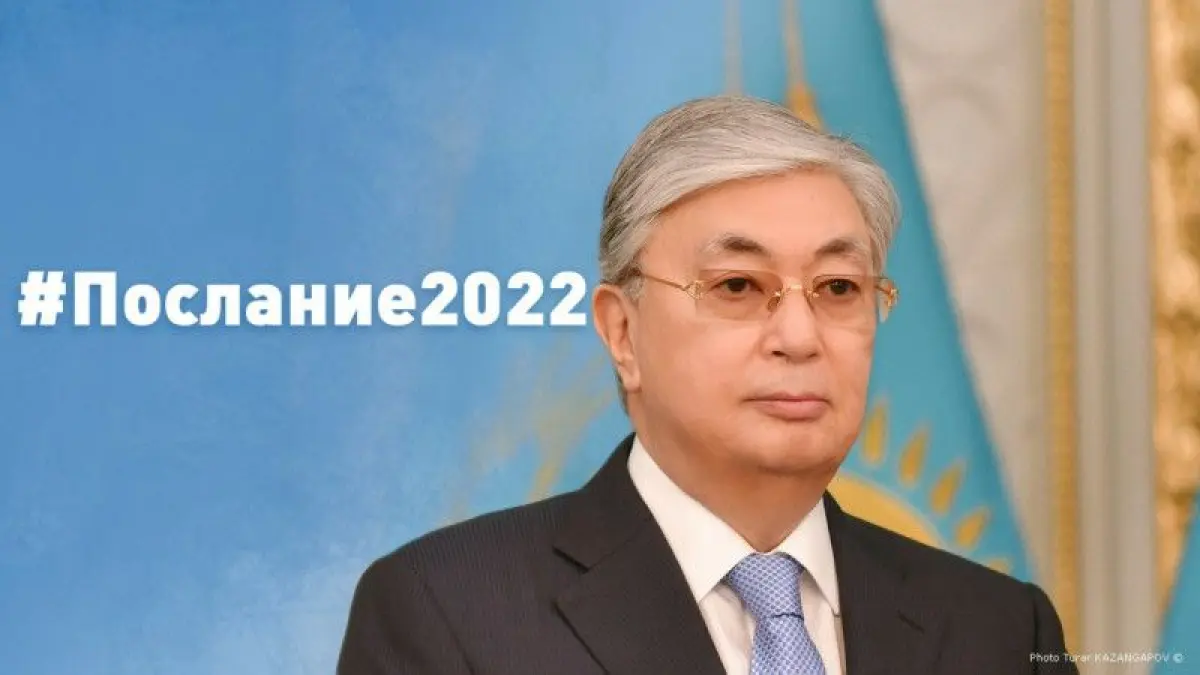
Kazakhstan will introduce differentiated tax rates for different sectors of the country's economy. This, VRKNews.kz reports, was announced on 1 September in his regular address to the people of Kazakhstan by the country's president, Kassym-Jomart Tokayev.
As Tokayev said, a new Tax Code of Kazakhstan will be prepared in 2023. The head of state announced in his address that the new code will include a new tax policy under which differentiated (different) tax rates will be introduced for different branches of the economy. Those who process should pay less tax — so that investors go into the difficult industrial sectors.
Tokayev also noted that the most problematic block — tax administration — must be completely renewed, since full digitalisation of tax control must be ensured, excluding any face-to-face interaction. To develop civilised trade, the use of the retail tax with adequate rates and simple procedures will have to be expanded.
As part of the tax reform, according to the president of Kazakhstan, it is important to consider the possibility of introducing a so-called “luxury tax”.
“It will be levied on the purchase of expensive real estate and vehicles and will not affect the middle class,” the president assured.
For our part we note that introducing differentiated rates really could radically change the situation in the economy, being one of the most systemic measures. After all, the VAT currently applied in the country without differentiated rates largely kills business.
Earlier this issue — the need to introduce differentiated tax rates — was raised at the Mazhilis plenary session of 25 May 2022 by Mazhilis deputy and Ak Zhol party leader Azat Peruashev.
“Since 2012 the Ak Zhol Democratic Party faction has been persistently proposing to the government to introduce sectoral reduced VAT rates for social and priority goods. This approach is widely used by OECD and EU countries: Sweden, Spain, Germany, Austria, Poland, Lithuania and others. The general VAT rate there may be 20–25%, and for agriculture 0%, for food products and consumer goods 3–5%, for housing construction, building materials, machinery and equipment 6–8%,” Peruashev said then in his speech.
After his speech he also posted on his Telegram channel the replies of the embassies of a number of developed countries, including EU members, about their use of reduced (preferential) tax rates on social goods and services (and not only). And asked people not to be surprised.
“Unlike our tax officials, developed countries understand equal competition correctly: not as equal taxes between a village shepherd and the owner of an oil pipe; but as equal taxes for equal types of activity. Note this detail: Canada applies not VAT but a sales tax (which was also discussed in my speech today), but even there staple foods and medical services are fully exempt from this tax,” the party leader explained in May.
The VRKNews.kz agency offers a detailed analysis of what “differentiated tax rates” are in the most varied countries of the world.
Full text of the Address of President Kassym-Jomart Tokayev to the people of Kazakhstan.


